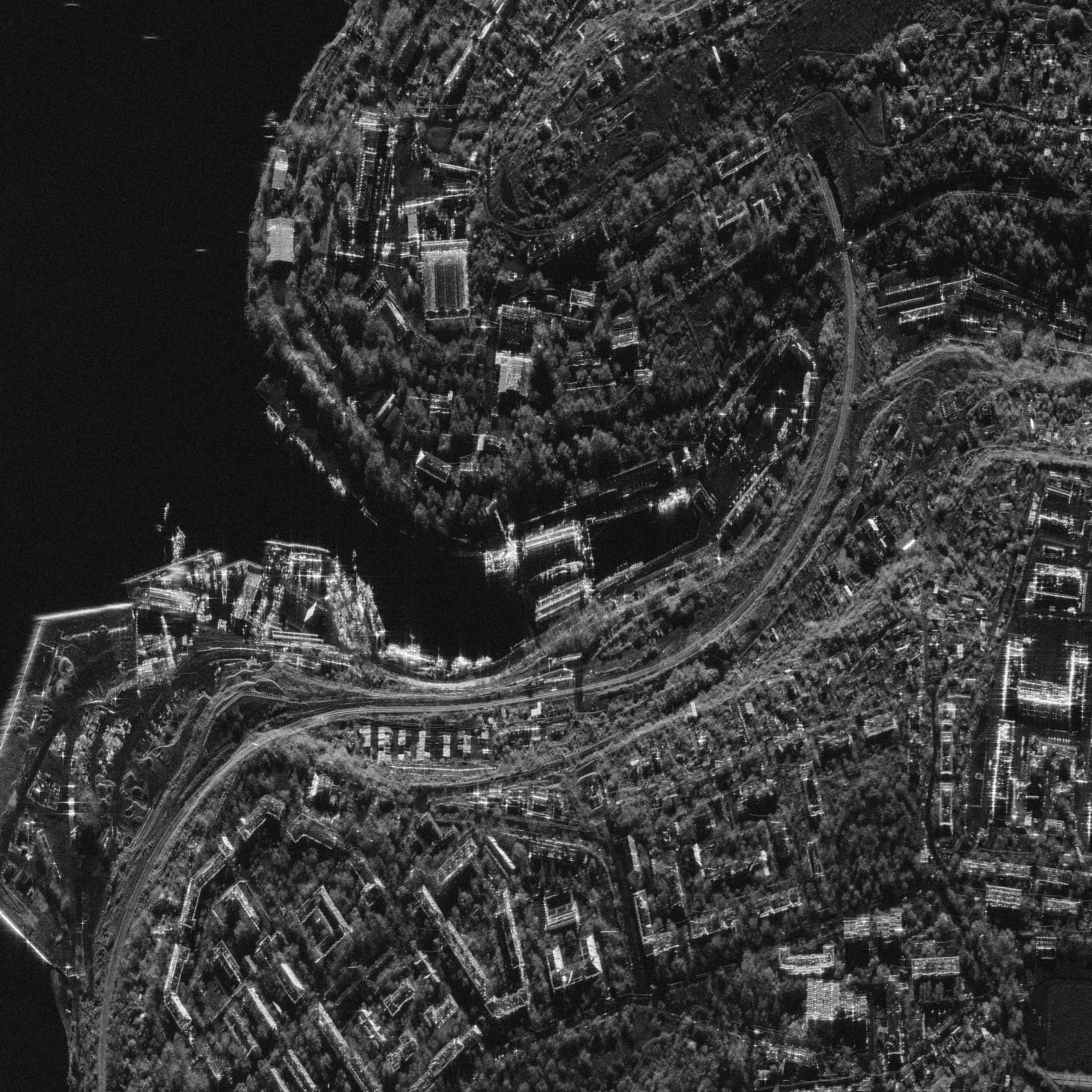
A decoy that looks like a tank to the human eye can appear as something else entirely in a SAR (synthetic aperture radar) image. In June 2026, the Danish Armed Forces put that distinction to the test with ICEYE.
How do decoy and concealment methods hold up against reconnaissance from space?
Decoys are a traditional method of war, used to draw an adversary's reconnaissance and fires away from real targets. Optical systems are relatively easy to fool with decoys that appear authentic to the eye. SAR works differently. Its image is formed from the backscatter of microwaves, which reveals a target's material, geometry and internal structure. A decoy shaped like a tank can register as something else entirely in a SAR image.
In Denmark the focus was specifically on how various decoy and concealment methods hold up against space-based SAR reconnaissance, including metal decoys engineered to mimic the backscatter of the real thing. The exercise built on ICEYE's earlier work supporting dispersed operations during France's ORION 2026 exercise, where the focus was real-time target location rather than counter-decoy analysis.
The Danish Armed Forces gained data that supports the further development of their protective methods, while it also enhanced their ability to identify enemy decoys. ICEYE came away with data that refines classification models inside automatic target recognition capability. The sharper the reconnaissance from space, the more demanding it becomes to protect against it, and the reverse holds just as true.
More than one hundred representatives from the Danish Ministry of Defence, the Armed Forces, DALO and the intelligence community attended the demonstration. Among them was the Commander of the Royal Danish Air Force and Space Force, Major General Jan Dam.
Where does ICEYE’s ability to distinguish decoys come from?
The ability to distinguish a real target from a decoy is not a function of resolution alone. It comes from three factors working together: image quality, sufficient revisit of the same area from different beam angles, and a target recognition capability that can read the nuances of a SAR image.
The same satellites that have supported Ukrainian forces in active conflict since 2022 have produced imagery for thousands of operational decisions. That operational record feeds ICEYE ATR (automatic target recognition) trained on the world's largest SAR dataset. Every image collected and every target classified improves the next.
Continued work with the Danish Armed Forces
This was the second engagement between ICEYE and the Danish Armed Forces in 2026. During the Brave Lion exercise in April, ICEYE supported Danish forces with an ISR Cell that delivered SAR imagery and analysis at brigade level. The June event built on those lessons and focused specifically on decoy detection.