Contact us
Get in touch with our experts to find out the possibilities daily truth data holds for your organization.


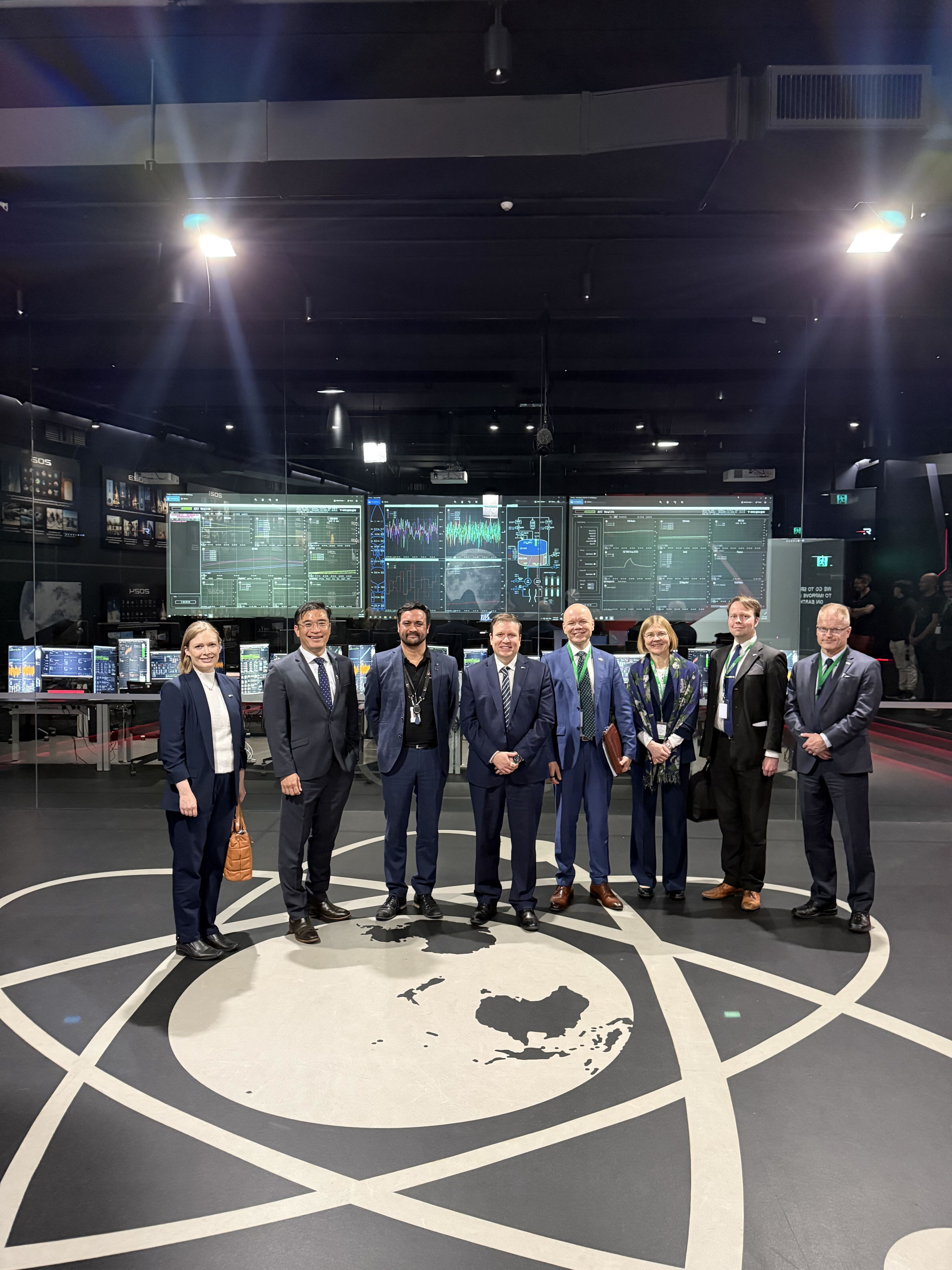
Finland's Minister for Foreign Trade and Development, Ville Tavio, led a delegation of Finnish companies through Australia and New Zealand, part of a broader push to deepen trade and defence cooperation between Finland and the region. During the New Zealand leg of the visit, ICEYE was represented by Kenny Yuen, our Vice President Missions for Australia & New Zealand.
Yuen's meetings on this leg went beyond capability and policy. He also sat down with New Zealand business leaders to talk about closer commercial ties between the two countries. The conversation was not just about New Zealand buying into a sovereign system. It was about local companies building a stake in it: ground segment work, data services, program support. ICEYE has built this kind of local industrial participation into other markets before, from Eagle Technology's role in New Zealand today to the RISS joint venture with Rheinmetall in Germany. Asked what has made Finland's export success possible, Yuen pointed to necessity, government support, and culture, and said ICEYE's own motto, to make the impossible possible, is a good example of that culture in practice. The pitch to business leaders was straightforward: a sovereign capability is worth more to New Zealand if New Zealand companies help build and run it.
That case is easier to make in New Zealand because the resilience side is already visible. ICEYE's local partner, Eagle Technology, integrates ICEYE imagery into its ArcGIS platform, and Fire and Emergency New Zealand used that data to help establish a Common Operating Platform after Cyclone Gabrielle. What New Zealand has not yet adopted is the continuous coverage service Australia uses, where ICEYE data covered 28 separate natural disasters last year across roughly 40 million square kilometres, the equivalent of scanning all of New Zealand 150 times, and was used by 60 government agencies, banks and insurers. As Yuen put it: "There's a real potential here in New Zealand to realise the benefits we've seen in Australia, where they have saved a lot of money, saved a lot of lives, helped the recovery process happen a lot faster."
The same constellation and software also underpin ICEYE's presence in countries across Europe and beyond. In Europe, ICEYE has delivered sovereign SAR missions to defence customers including Finland, Poland, the Netherlands, Sweden and Germany's Spock program, a contract worth up to €2.7 billion including contracted value and options. Ukraine has taken that model furthest: the Ukrainian Armed Forces operate ICEYE satellites of their own, with additional coverage from allied governments operating satellites in the constellation. Further afield, ICEYE supports government users in the United States, and in Australia, where disaster response agencies have used ICEYE data during major flood and cyclone events. Yuen, who served in the Australian Defence Force before joining ICEYE, has said sovereign satellite capability, covering launch, tasking and downstream data, can be operational within 12 to 18 months of a contract being signed, whether a country chooses to own the satellites outright or run them as a service.
Minister Tavio pointed to ICEYE during the visit as an example of the technological cooperation Finland wants to expand with the region, noting that ICEYE provides high quality data for both military and commercial use. For New Zealand, that combination is the point: a single piece of sovereign infrastructure that already pays for itself through disaster response, while building the national security capability the government has said it wants for a more contested environment.
ICEYE thanks Minister Tavio and the Finnish delegation for putting sovereign space capability on the agenda in New Zealand. We will continue these discussions with government, industry and allied partners across New Zealand and Australia.
.jpg)
26 September 2026

25 September 2026
23 September 2026